
Building IoT-Based Revenue Streams; Thoughts for the ProAV Industry
A reporter recently asked my thoughts on the professional audio-visual industry (“ProAV”) developing new revenue opportunities related to IoT. I think some of the ideas could be adapted more broadly to the tech sector in general.
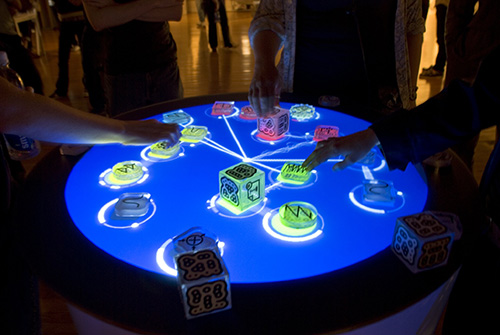
The ProAV community has traditionally focused on visual and audio domains, often in conjunction with built environments (buildings) and live events (concerts, public keynotes, conferences, etc.). A few years ago I helped re-craft the strategic plan for the ProAV Industry Association (formerly INFOCOMM, now AVIXA) with an emphasis on developing “exceptional experiences” through the use of technology. With IoT, ProAV is now poised to move even more aggressively into the realm of building “tangible interactive experiences,” though many of its constituents are still trying to determine how best to do so.
Here are some of the initial thoughts I shared:
- With IoT, there are many questions regarding how to best leverage the technology in the near term to create meaningful value to enterprises and consumers. This is coming at a time when the ProAV community is still trying to wrap its arms around what we mean by “exceptional experiences” in general. IoT brings entirely new experience opportunities.
- ProAV is still working to break out of the mindset where the focus is on device control and information presentation. IoT is an extreme example of something different, wherein people may not do anything at all to exert control but rather their actions are “sensed” by the system. Similarly information is not pre-packaged and presented in a sequential fashion in a slide deck or video, but is rather available for query and/or may be analyzed with AI algorithms and even trigger actions in the physical world to which humans may then react. The new paradigm is something radically different than that to which we are accustomed.
- The design of information system solutions — of which AV systems are a subsystem — will increasingly encompass the “content” that is data, patterns, visualizations, etc. more than the “substrate” of hardware and software elements. The design of “exceptional information experiences” will more complex. It will mean dealing not just with the visual quality of imagery or the audio clarity and definition, but with the kind of emotional response they evoke, the insights they present, or the performance they encourage.
- Much of IoT’s current available market consists of what is called the Industrial Internet of Things (IIoT), emphasizing machine-to-machine communication. The ProAV community’s big opportunity lies more in the machine-to-human and human-to-human realm. The latter in particular is an area that others have not tapped – the idea that we can use sensors, data repositories, machine learning and novel forms of interface to augment interpersonal experiences both in work settings and in the home. Novel interfaces such as Amazon’s Alexa are disrupting our conceptions of what the human-computer-interface may look like in the future, but the question of how these technologies can enhance human experience in group settings and lead to improved team performance has not yet been explored in meaningful ways.
- The ProAV industry is well positioned to exploit IoT technologies to build value-adding immersive experiences that also deliver a sense of “wow,” but its workforce will need to be re-tooled. The skill sets needed will be interwoven and interdisciplinary, but the training programs don’t yet exist because the disciplines are still being developed. On the one hand ProAV professionals are accustomed to designing and implementing complex systems using the digital descendants of traditional AV systems, but in IoT the building blocks come in the form of software protocols, data streams, and dynamic interfaces rather than traditional low-voltage systems. Perhaps more significantly, the ProAV industry does not have a core constituency of creative designers who are trained to develop new forms of immersive information experiences (e.g. “data visualization designers” who understand how to present data in compelling, yet clear and unbiased, formats).
- Data visualization is an area in which the ProAV industry could develop high-value services to offer its clients. The effective visual design of information is a blend of art and science, and it is important for more than aesthetic reasons. Edward Tufte elegantly demonstrated how the way one chooses to present information can affect the insights – true or false – that others can draw from it. As enterprises collect increasing amounts of data and partner with the ProAV community to develop systems for developing and presenting their analysis, there will be tremendous opportunities for consultants and service providers to guide their clients towards best practices in data visualization and collaborative work around data.
- As has long been the case, AV system designs are limited by what I refer to as the “palette” of system components provided by manufacturers. With the advent of IoT, the set of manufacturers has expanded considerably as manufactures from the IT world provide platforms and components. The ProAV community brings a wealth of understanding about creating dramatic, yet valuable, user experiences, and so there is an opportunity for manufacturers to adopt a design thinking approach wherein they develop ideas for new products and solutions based on need-finding through partnerships with ProAV.
- A significant challenge for the implementation of IoT systems in the workplace and homes will be striking the right approach with respect to privacy and security. Privacy and security are joined together, and much has been made of the dangers IoT presents to the general IT network and devices connected to it when security is not considered from the outset. Even legitimate IoT systems and services, however, will need to be mindful about how personal data – and even personal “information traffic” that is not stored as data but nevertheless reflects something about users – is handled. The paradox here is that users need to be willing to share more in order to get the most of their data, so finding the right balance between privacy and openness will need to be a factor in designing IoT systems, and ultimately IoT standards.
The ProAV industry has an opportunity to apply its cleverness to exploit the possibilities that IoT provides. It needs to be careful not to squander the window of opportunity, however, as competition in this space is going to be fierce and many deep-pocketed companies outside of the ProAV world – e.g. Amazon, Microsoft, Google, Apple, etc. – are busy trying to exploit some of the same opportunities.
In an ideal world, the ProAV community will help guide the creation of new opportunities. To do so, however, will require it to embrace new technologies and new design thinking approaches, to build a deeper understanding of human interaction patterns and data-driven workflows, and adopt a new future-looking perspective on what is possible.
If you are interested to explore specific opportunities for building lines of business and revenue streams around IoT, let’s connect.